Consolidating Legacy Systems into a High-Performance, Unified Front-End
The Challenge:
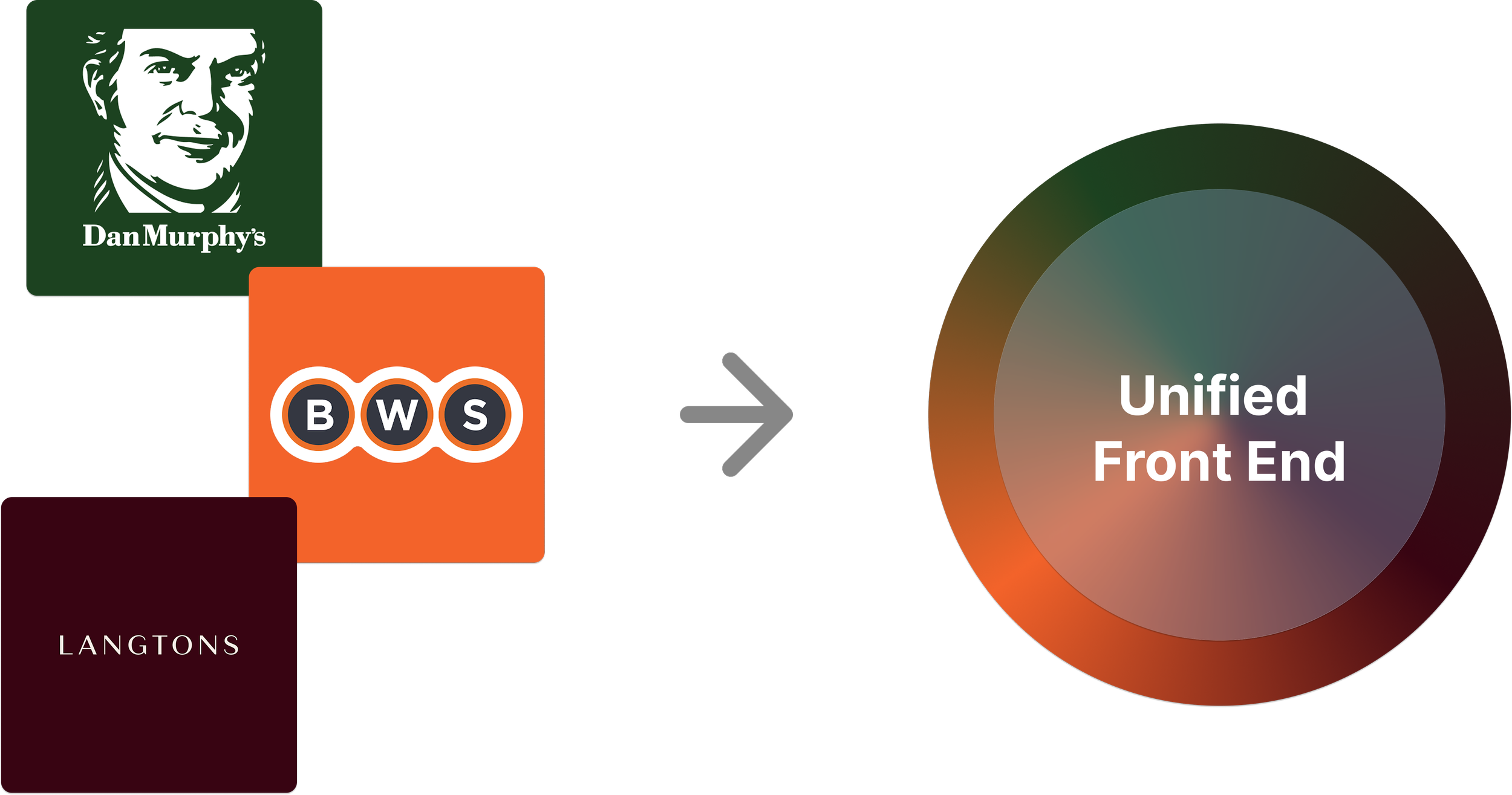
The business was undertaking a complete digital transformation to move away from expensive, fragmented legacy systems toward a single, unified front-end (UFE) that could serve all brands (Dan Murphy’s, BWS and Langtons). However, the primary obstacle was operational complexity and brand protectionism. Every key business function had its own set of requirements and legacy features they were unwilling to compromise on.
The Strategy:
I led a team of 5 designers to act as the "diplomatic core" of the program. To alleviate tensions, I facilitated a two-week proof of concept to show our internal design capability could handle the complex deliverables. This initiative successfully demonstrated to executives and agency partners our ability to bridge brand gaps and drive cross-functional agreement. Throughout the program we used Gemini and Miro AI to perform deep sentiment reviews, best-practice analysis, and feedback synthesis, ensuring that every function felt their "must-haves" were addressed in the new front end experience. I also created a new DesignOps model for the project to ensure consistency across the new CX journey, as well as appropriate feedback loops for stakeholders across all levels.
The Impact:
We achieved a landmark organizational win: total cross-functional consensus on a unified design approach, down to the finest detail. We delivered a suite of designs that were scalable, maintainable, and technically elegant. This alignment eliminated roughly 25% of redundant design effort, and the new operational processes were embedded in all teams moving forward. The end-to-end journey visualisations I created are now the definitive source of truth for all third-party partners and internal squads, ensuring that even after a shift in program priorities, the strategic blueprint remains intact.
Tools: Gemini, Figma, Miro (+AI), Supernova, Confluence/Jira, Sheets
The Process
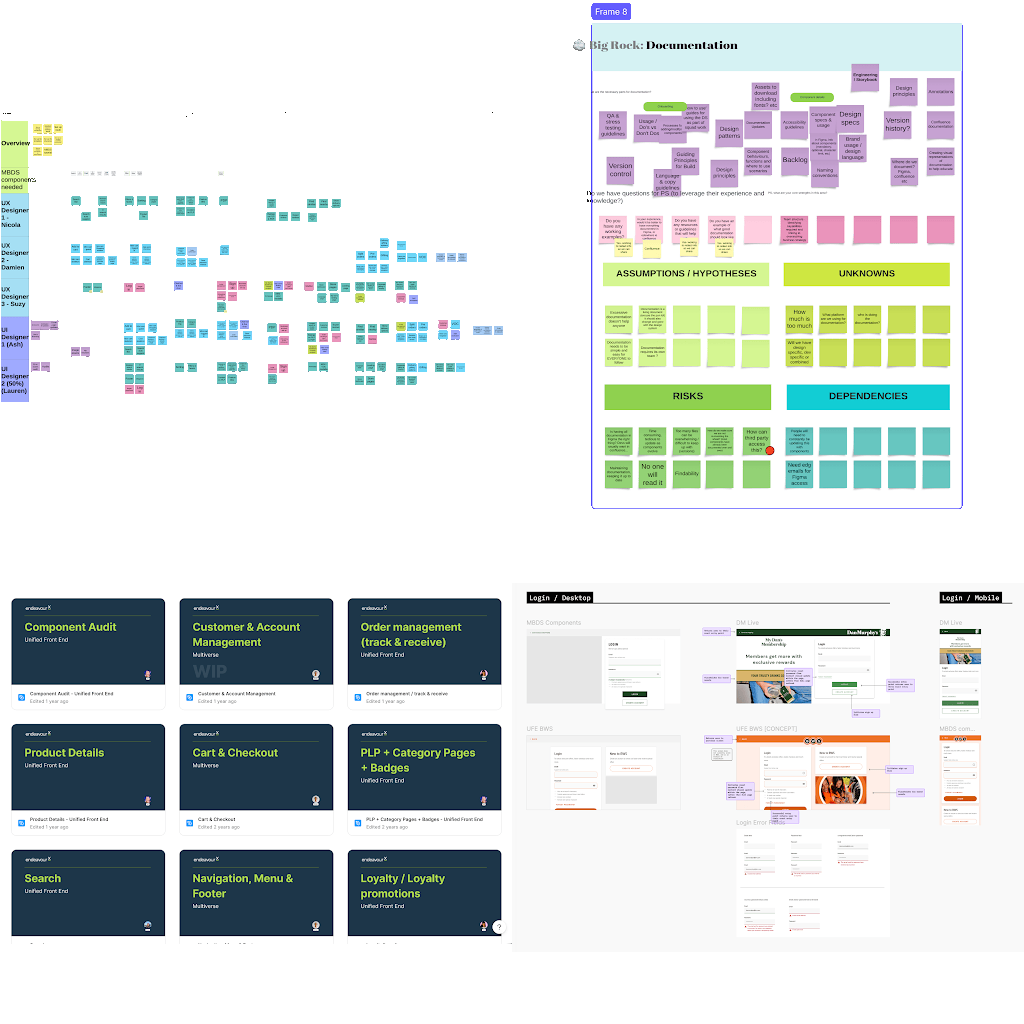
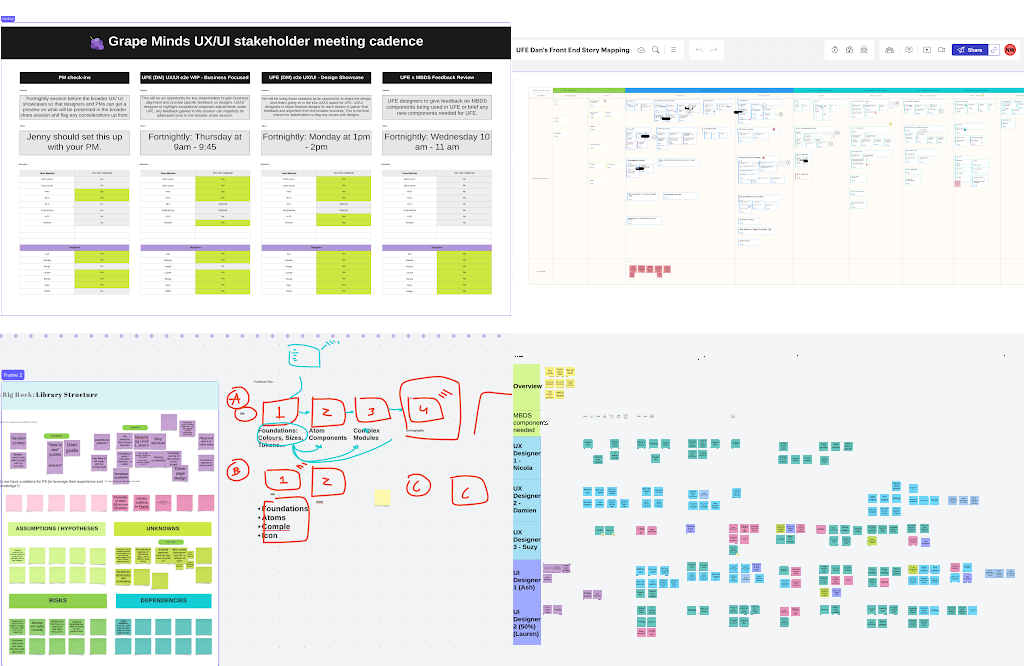
To transition from legacy custom builds to a unified system, we had to visualize the entire ecosystem to show stakeholders how their specific needs fit into the bigger picture. Balancing best in class customer experience with cross-functional collaboration was my priority.
The 2-Week Capability POC: I delivered a high-intensity proof of concept to de-risk the project. This served two purposes: validating that our internal design team could meet the production ready technical standards required by our agency developers, and help faciliate the crucial unified stakeholder vision.
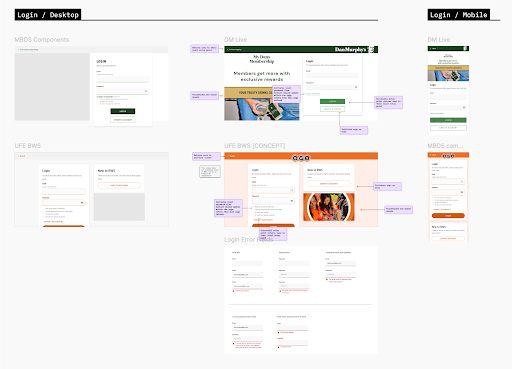
Journey Orchestration: As part of the design deliverables, I led the creation of end-to-end journey visualisations. By mapping the entire Dan Murphy’s and BWS experience into a single, cohesive blueprint, I provided the business with its first global view of the platform’s technical and user logic.
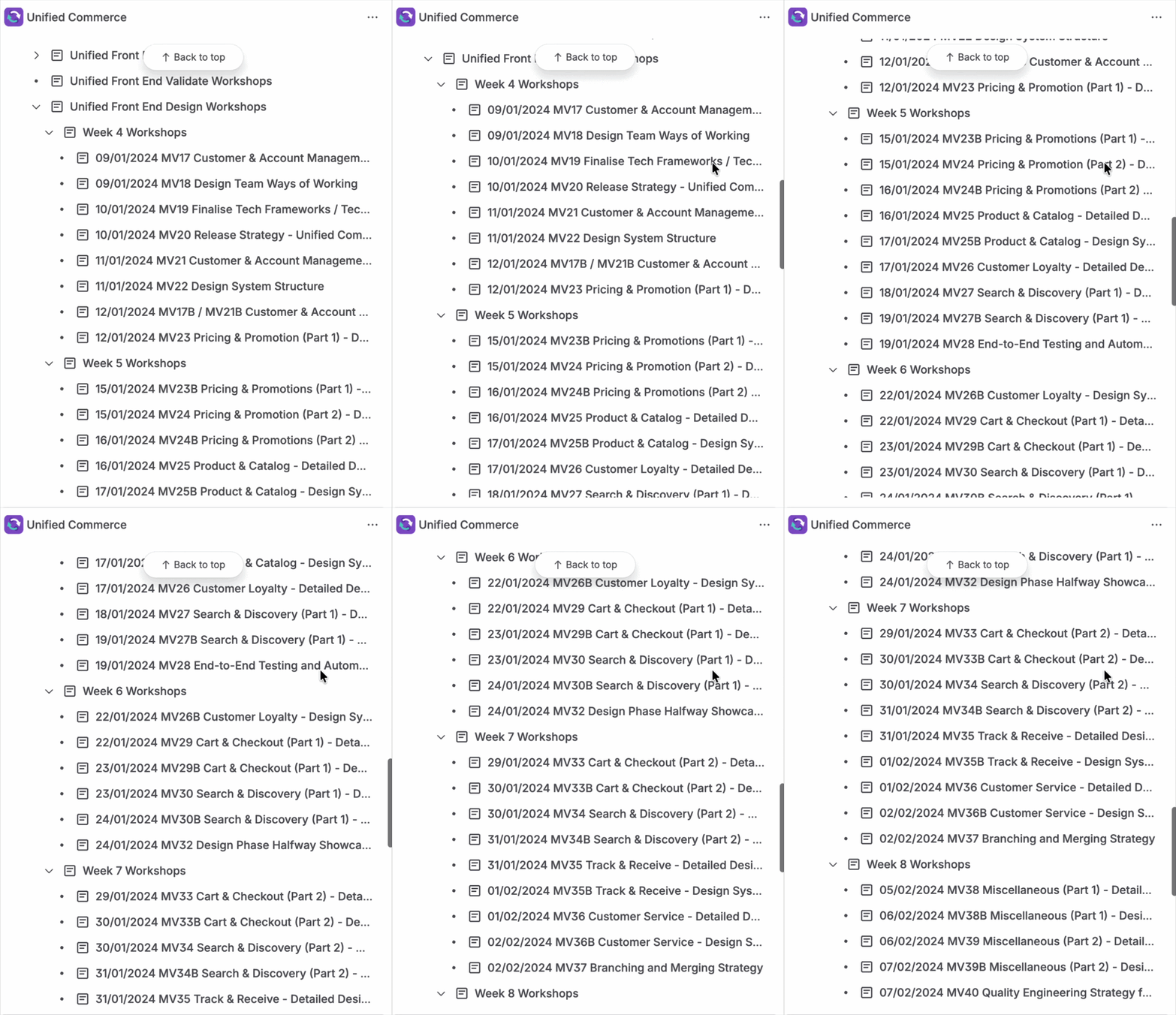
Bespoke DesignOps: I engineered a new DesignOps framework specifically to support the UFE design team's high-velocity requirements. This included establishing a multi-layered structured review cadence, standardising Figma file structure, templates and guidelines, as well as all necessary documentation and decision logs. I instituted clear ways of working that ensured consistent, quality deliverables in a high speed, high pressure environment.
AI-Augmented Synthesis: To manage the immense volume of cross-brand requirements, I introducedan AI-first workflow using Gemini and Miro AI. We used these tools to perform deep sentiment reviews of current features and best-practice analysis, ensuring that the simplification of the front-end didn't come at the cost of essential brand value. We also used them to track and maintain the high volume of feedback in a cohesive and usable form.
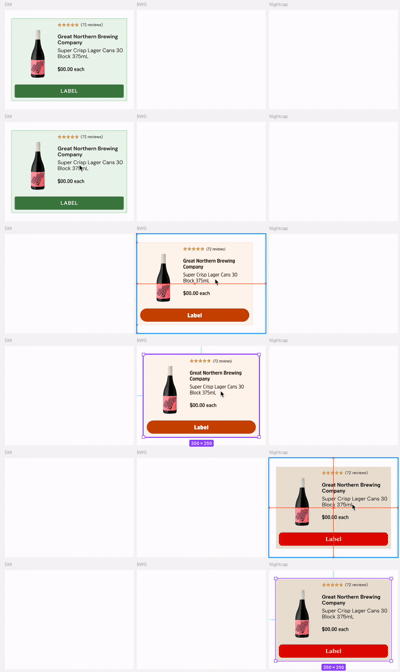
The MBDS Feedback Loop: We were the first consumers of the newly built Multi-Brand Design System. Part of our process included stress testing the new components, and having weekly feedback sessions with the design system team to ensure it was fit for purpose before wider publication.
Business Impact
While shifting corporate priorities led to a temporary pause before overall project completion, the design work and operational frameworks I delivered have provided a permanent uplift in the organisation’s digital capability and protected its long-term investment.
25% redundant design work eliminated
The DesignOps model and standardised ways of working eliminated repetitive design work, saving time previously spent on constantly rebuilding from scratch.
We reduced friction through standardizing design patterns and a unified file architecture to minimized context-switching, ensuring that assets were intuitive to find and consistent to build. This created a predictable environment that streamlined cross-brand delivery, and endured beyond the project to become the new norm in the organisation.
Foundational Cross-Brand Consensus
Achieved complete alignment across all major business functions on a unified front-end strategy, including an intentional 10% deviation for injecting brand personality. This successfully broke longstanding brand silos and established a documented, executive-approved blueprint that remains the north star for future consolidation.
Comprehensive documentation and a rigorous decision-making framework ensure a clear audit trail, allowing for a seamless transition when the project resumes.
Onboarding: From Days to Hours
The E2E CX journey visualisations transitioned platform logic from a time consuming, manual effort to a governed, visual asset. This has reduced onboarding and knowledge-transfer friction for third-party partners from days to hours.
This visibility has also made informed strategic decision-making and the identification of high-impact opportunities across end-to-end features much more efficient.
Securing Investment Longevity
I ensured every design artefact, decision and research report was meticulously documented and left in a production ready state. This ensures the business can resume building the transformation at any time without rework, as the technical and user-experience foundations are already established.
As the designs were built entirely using the design system, they will automatically update and remain relevant over time.
Technical Skills
Figma
Miro & MiroAI
GenAI (Gemini)
Supernova
Confluence/Jira
Sheets
Design Skills
Design operations & strategic planning
Stakeholder management and alignment
AI-accelerated research & documentation
End-to-end wireframes and high fidelity designs
Design system orchestration and integration
Design leadership and project management